
CARS FROM JAPAN — AUCTIONS
Introduction
WHAT ARE CAR AUCTIONS IN JAPAN?
Japanese car auctions are a closed, well-organized system for selling used vehicles, accessible only to licensed dealers and companies registered in Japan. Every week, thousands of cars — both Japanese and European brands — are listed there, many of which were previously owned by private individuals, companies, or leased. For overseas buyers, this is one of the most reliable sources of used cars: every vehicle undergoes a detailed inspection, and its condition is presented in the so-called auction sheet, a report prepared by a certified appraiser. Auctions such as USS, TAA, JU, or CAA operate throughout Japan, offering a complete range of vehicles — from everyday city cars and luxury sedans to collectible classics and rare JDM models. By using the Japanese auction system, buyers gain access to genuine cars often in much better technical and visual condition and at significantly lower prices than those found on European classifieds. That’s why importing cars from Japan through auctions is becoming increasingly popular among conscious buyers in Poland and across Europe.
HOW DOES A JAPANESE AUCTION SHEET WORK AND WHAT DO THE GRADES MEAN?
The auction sheet is an official document issued by an appraiser of the auction house, who conducts a detailed inspection of the vehicle before it is put up for sale. It is from this sheet that you can learn everything about the car’s technical condition, its history, and any possible damage. The key element of the sheet is the overall vehicle grade, ranging from S (new) to R (repaired after an accident or collision). Additionally, the interior condition is also evaluated — usually marked with letters from A (perfect) to D (damaged).
The sheet also includes a body diagram showing markings of scratches, dents, rust, and replaced parts — the so-called damage diagram. Another important part is the description of equipment, fuel type, transmission, drivetrain, mileage, and chassis number. Sometimes the appraiser adds additional remarks, such as notes about cigarette odor, signs of use, or the need for minor repairs.
The ability to read and interpret the auction sheet is the key to safely purchasing a car from Japan — it allows you to avoid unpleasant surprises and choose a vehicle that is truly worth its price.
It is important to note that auction sheets are created according to strictly defined standards, which means that regardless of the auction house’s location, the grading and technical markings remain consistent. This makes it possible to compare different vehicles in a clear and objective way.
That is why it is worth understanding the symbols and logic used in auction sheets — they are not just a report, but a complete history of the vehicle, presented in a condensed yet very precise form.
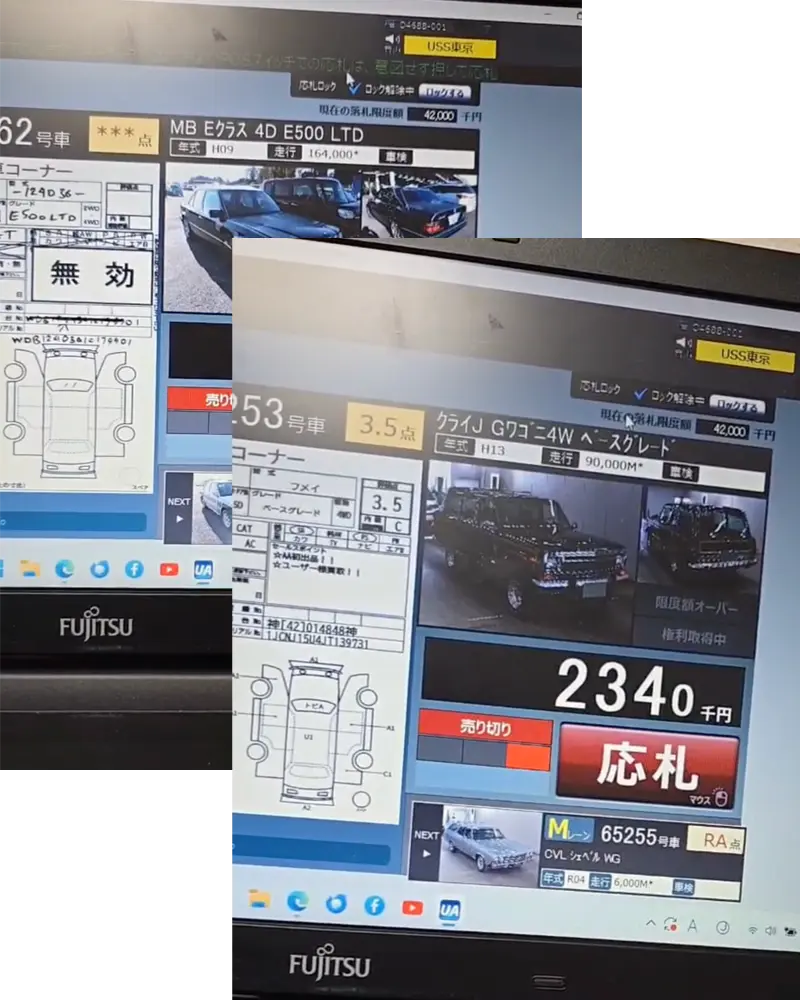
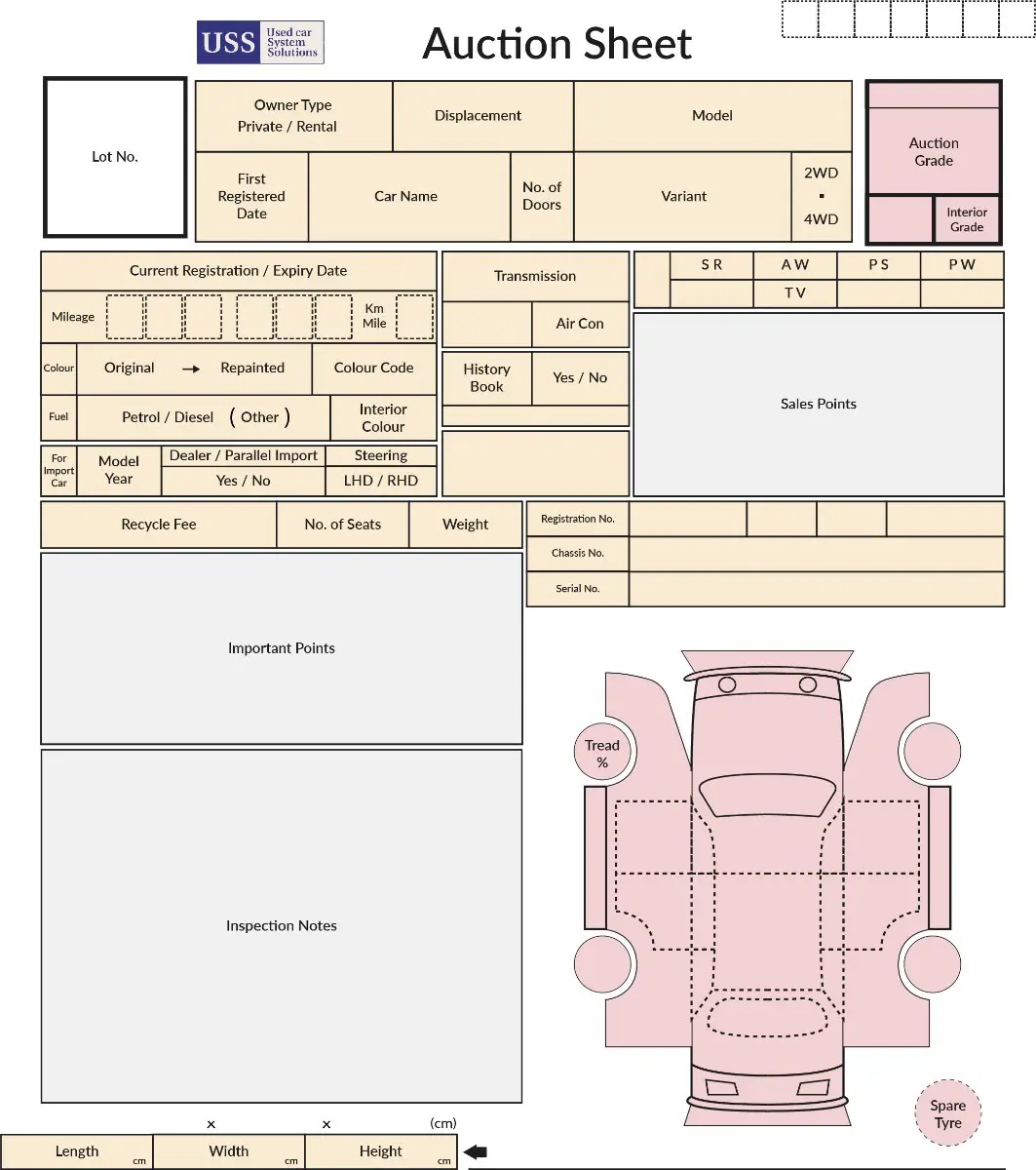
(AUCTION Grades):
S – The car is practically new, with mileage below 10,000 km and an age not exceeding 1 year. Perfect condition.
6 – Excellent technical and visual condition. Mileage below 30,000 km, the car is no more than 3 years old.
5 – Very good overall condition. Mileage below 50,000 km. Very minor signs of use possible (e.g. micro-scratches).
4.5 – Good condition, mileage up to 100,000 km. The car may have light scratches or minor paint imperfections.
4 – Mileage up to 150,000 km. Visible scratches, small dents, or interior wear typical for the vehicle’s age are possible.
3.5 – Average condition, noticeable signs of use. Scratches, dents, faded paint, and interior wear are to be expected.
3 – Heavily used vehicle. Visible body defects, scuffs, scratches, dents, and significant interior wear.
2 – Poor technical condition. Very worn vehicle or one that has undergone extensive modifications (e.g. tuning).
1.A – Engine damage or serious mechanical failure.
1.B – Vehicle after flooding.
1.C – Vehicle after fire.
(Interior grade):
The auction sheet is an official document issued by an appraiser of the auction house, who conducts a detailed inspection of the vehicle before it is put up for sale. It is from this sheet that you can learn everything about the car’s technical condition, its history, and any possible damage. The key element of the sheet is the overall vehicle grade, ranging from S (new) to R (repaired after an accident or collision). Additionally, the interior condition is also evaluated — usually marked with letters from A (perfect) to D (damaged).
The sheet also includes a body diagram showing markings of scratches, dents, rust, and replaced parts — the so-called damage diagram. Another important part is the description of equipment, fuel type, transmission, drivetrain, mileage, and chassis number. Sometimes the appraiser adds additional remarks, such as notes about cigarette odor, signs of use, or the need for minor repairs.
The ability to read and interpret the auction sheet is the key to safely purchasing a car from Japan — it allows you to avoid unpleasant surprises and choose a vehicle that is truly worth its price.
It is important to note that auction sheets are created according to strictly defined standards, which means that regardless of the auction house’s location, the grading and technical markings remain consistent. This makes it possible to compare different vehicles in a clear and objective way.
That is why it is worth understanding the symbols and logic used in auction sheets — they are not just a report, but a complete history of the vehicle, presented in a condensed yet very precise form.
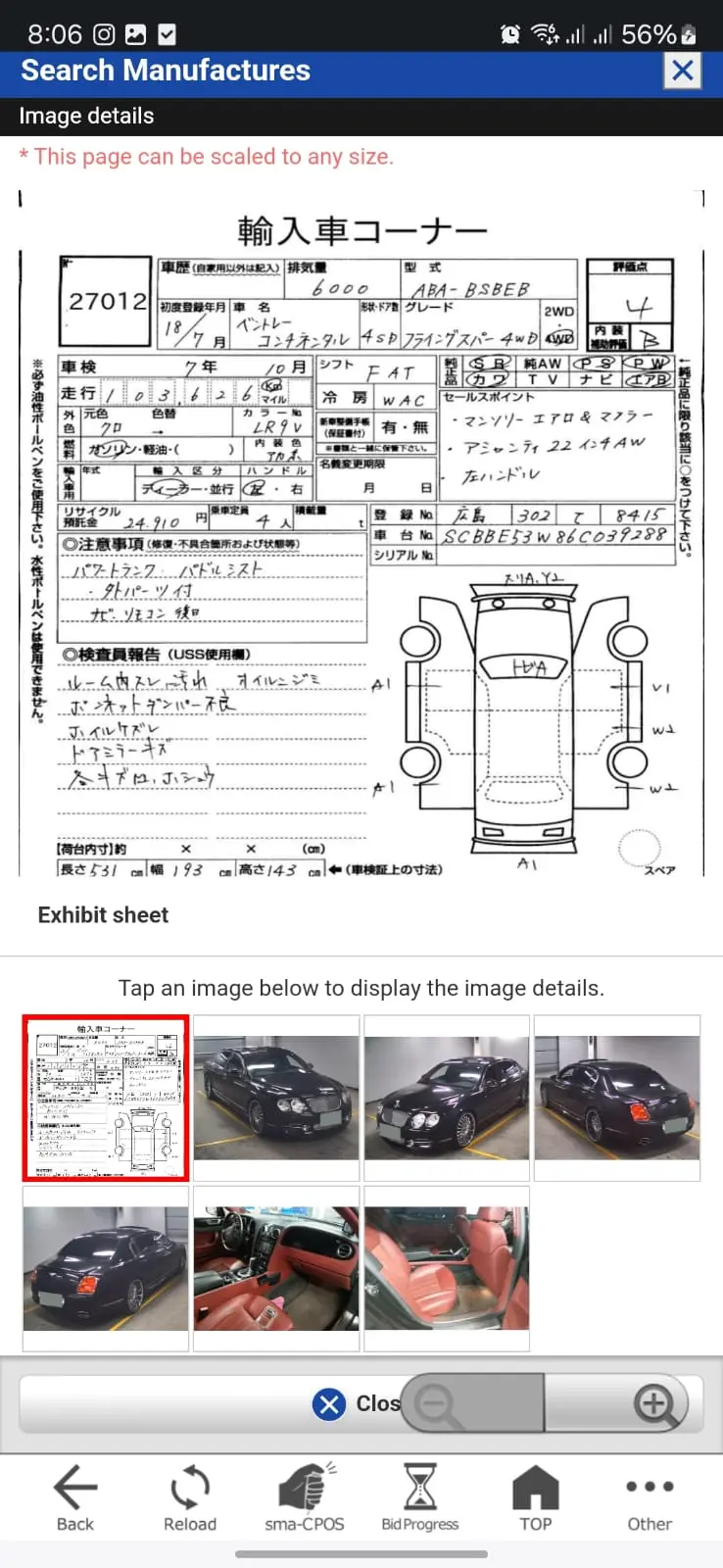
(Interior grade):
A – The interior of the vehicle is in perfect condition, practically like new. No visible signs of use.
B – The interior is very well maintained, with minimal signs of wear — possible slight scuffs on the steering wheel or seats.
C – Moderate interior wear. May show light stains, minor upholstery repairs, or small imperfections typical for the vehicle’s age.
In reality, most cars graded “C” are in decent condition — many descriptions that look serious on paper actually resemble grade “B” in practice.D – Clearly used interior with visible wear, dirt, or minor defects. Requires cleaning or partial refurbishment.
E – Very poor interior condition. Noticeable unpleasant odor (e.g. cigarette smoke, moisture). The cabin requires a complete restoration.
Body Damage Grades
Scratches – A
A – minor scratch
A1 – scratch about 2–3 cm long
A2 – scratch up to 10 cm
A3 – scratch over 10 cm
Dents – U
U – small dent
U1 – dent about 2–3 cm in diameter
U2 – dent up to 10 cm
U3 – dent over 10 cm
Cracks – Y
Y – small crack
Y1 – crack about 2–3 cm long
Y2 – crack up to 10 cm
Y3 – crack over 10 cm
Paint Repairs – W
W – minor paint repair
W1 – panel repainted, looks like new
W2 – good repaint, but may slightly differ from factory finish
W3 – visible repaint: uneven surface, color shade differences, imperfections
Parts Requiring Attention or Replacement – X / XX
X – part requires replacement
XX – part has already been replaced
Rust and Surface Damage – S / C / E
S – surface rust
C – visible signs of corrosion
E – small pits or dimples in the metal surface
Additional Symbols
Glass – a symbol on the window indicates a stone chip, crack, or repaired area
Tires – a number next to the wheel indicates the remaining tread depth percentage (e.g., 8 = 80%, 1 = 10%)